
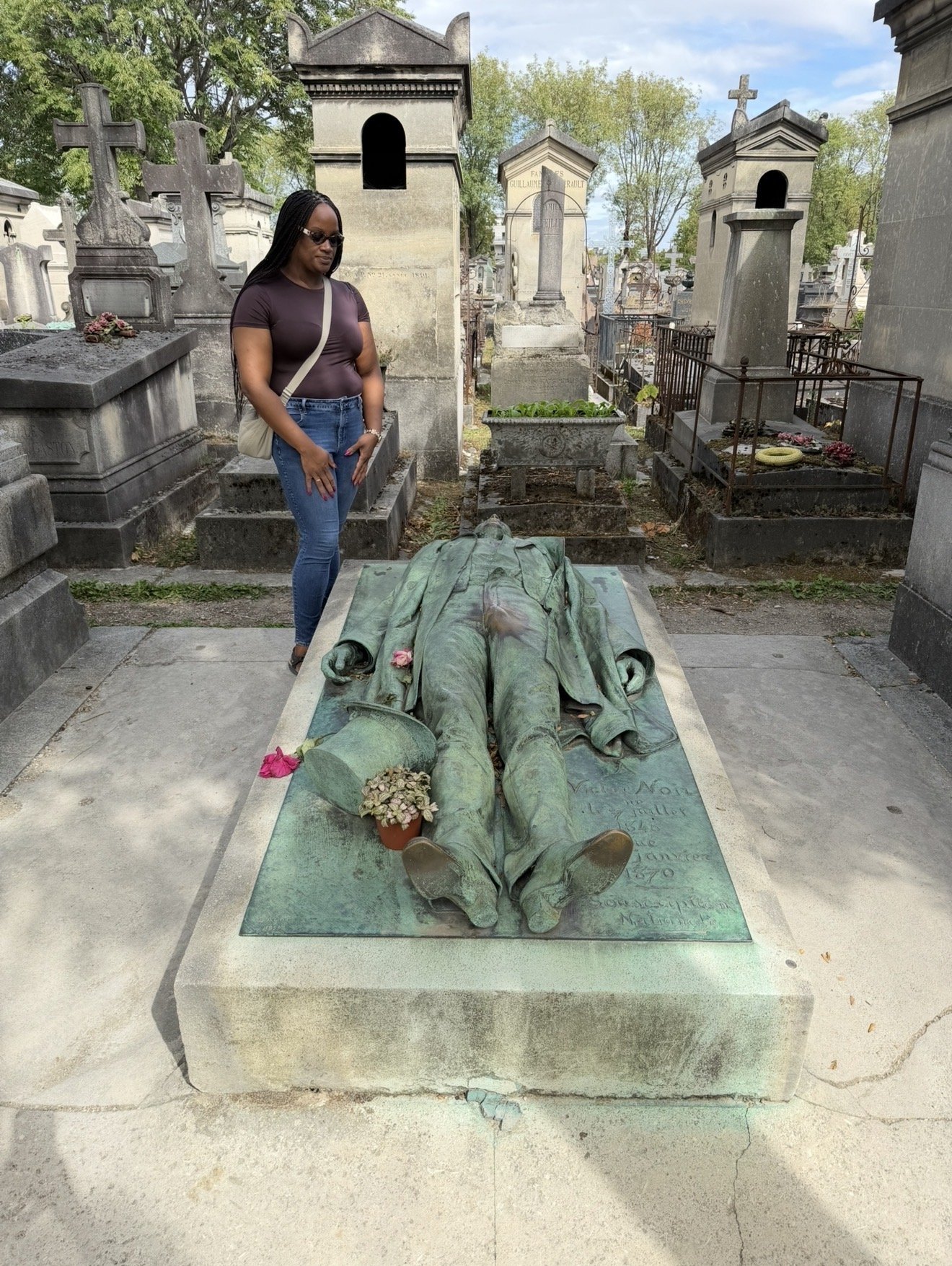

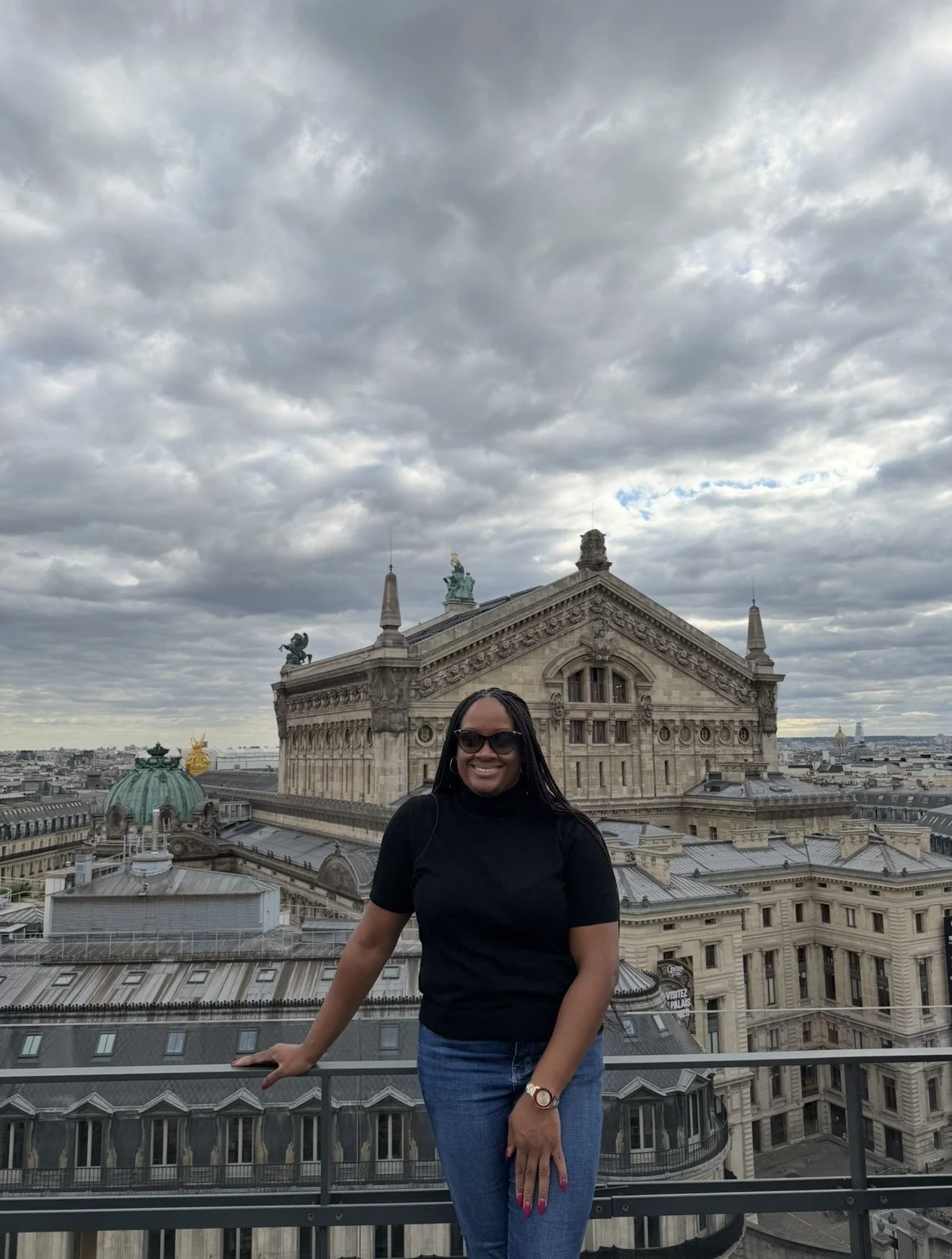


In the past week, I received a little nudge to keep writing. Even if it's just a sentence. To stop overthinking how I am going to show up on the page, what I will share, or whether I have found the right words. Just show up.
So, in the spirit of showing up with a little more transparency, today's Undoing Toxic is something that has been sitting in my heart for a while. A reflection on heartbreak, attachment, and the process of letting go. This summer taught me that being done is a process. That sometimes our grief is layered, may or may not make sense to others and we can be grieving the hopes and dreams we attached to what we wanted.
Two pieces of advice stayed with me:
"Being done is a process."
"You have to let it go. You're not going to get what you want from this."
And then, four words: It is not written.
Today's reflection is for anyone learning to release what they hoped something would become and make peace with what it actually was.
It is not written. Ma ktabsh. ما كتبش
Mistaking Attachment for Love
I convinced myself I was happy.
This was what I wanted. I dressed up, made plans, did the things. I texted, called, sent photos.
There was a part of me that genuinely wanted to believe I was enjoying it all. But underneath those moments was a quieter kind of grief. Sitting at dinner alone, wishing I had someone across the table to share the experience with. Seeing something beautiful and wanting to send a picture, wishing the person I was sharing it with could actually be there. Living my life while simultaneously feeling the absence of someone I wanted to experience it with.
Sometimes, we can become so committed to making something work that we don't stop to ask ourselves whether we are actually happy with what it is.
This summer, two pieces of advice stayed with me.
The first was: “It is not written.” ما كتبش
The second: “You have to let it go. You're not going to get what you want from this.”
At first, I wasn't sure what to do with either of them. There is something difficult about hearing that the thing you have been hoping for, praying about, making room for, and trying to nurture may not become what you imagined.
But sometimes, the truth is not that we haven't tried hard enough. It is that we are trying to make a reality out of a possibility that may never come to fruition.
“It Is Not Written” ما كتبش
There is an expression in Moroccan Darija, ma ktabsh (ما كتابش), which translates to “it wasn't written.” It carries a sense of something that was not destined to unfold as we had hoped.
I have been sitting with this word since it was given to me.
Not everything we want will happen. Not every relationship will become what we imagined. Not every opportunity will materialize, and not every season of life will follow the timeline we carefully constructed in our minds. Sometimes, we have to accept that something can matter to us deeply and still not be meant to continue in the way we hoped. That can be difficult to reconcile, especially when we have invested so much of ourselves. We remember the conversations, the plans, the promises, the moments that made us believe there was something worth holding onto. We think about what could have been if circumstances were different, if someone had shown up differently, if we had been more patient, or if we had just given it a little more time.
And in doing so, we can lose sight of what is actually happening in front of us.
There is a difference between loving someone and being attached to the possibility of what a relationship could become. There is a difference between having hope and continually negotiating with reality. Sometimes, we are not holding on to what is. We are holding on to what we thought it would be.
“Being Done Is a Process”
One thing I have learned is that being done is a process.
We often imagine that letting go happens in one defining moment. That we reach a breaking point, make a decision, and suddenly feel free. But the reality can be much less straightforward.
You can know something is no longer serving you and still miss it. You can recognize that your needs are not being met and still wish things were different. You can make a decision that is right for you and still have moments when you question it.
Sometimes, the emotional attachment outlasts the decision. We can understand something intellectually long before we are ready to accept it emotionally.
And I think this is where we have to give ourselves some grace. We do not always stop wanting something simply because we recognize that it may not be available to us. We do not immediately detach from the memories, routines, hopes, and expectations that have become part of our lives.
But perhaps the work is not to force ourselves to stop caring. It is to begin making decisions that reflect what we know, rather than what we continue to hope will happen.
The Weight of Our Expectations
Sometimes, attachment isn't just about a person. We become attached to outcomes, timelines, expectations, and the stories we have been telling ourselves about how our lives should unfold. We become attached to the potential of a relationship, the promise of a friendship, the security of a job, or the idea that if we keep doing everything right, life will eventually look the way we imagined.
And when those things don't happen, we have to grieve more than the immediate disappointment. We have to reconsider the story we have been telling ourselves.
We all carry expectations. Some are spoken, while others are quietly held. Expectations about how people should treat us, how friendships should evolve, what family should look like, what love should feel like, and where we should be professionally and personally by a certain age.
Sometimes, we expect people to show up in ways they simply cannot or will not. We expect friendships to last forever, relationships to progress, family members to understand us, and professional opportunities to lead somewhere meaningful. We can spend years attached to an idea of how something should be, even when our lived experience is telling us something different.
There is also the expectation we place on ourselves. The milestones we thought we would have reached by now. The relationships we thought would have progressed. The home we thought we would own, the family we thought we would have, the career we thought would look different.
It can be uncomfortable to acknowledge that our lives may not be unfolding according to the plans we once made. But changing our expectations does not mean we have failed. Sometimes, it means we are allowing ourselves to see new possibilities.
More Doesn't Necessarily Mean Better
There is something else we have to consider when talking about attachment: the belief that the more we invest in something, the more likely it is to work out.
We give more time, more patience, more understanding, more chances. We tell ourselves that we have already come this far, that we have put so much into this relationship, friendship, job, or season of life that walking away would mean losing everything we have invested.
But investment does not guarantee return.
Sometimes, despite our best efforts, the returns begin to diminish. We give more and receive less. We become increasingly responsible for keeping something alive, often at the expense of our own needs. What once felt reciprocal begins to feel like something we are constantly working to sustain.
And perhaps one of the harder lessons is recognizing that more effort does not always lead to a better outcome. More patience cannot manufacture someone else's capacity. More communication cannot create a willingness that isn't there. More time does not necessarily turn potential into reality.
This isn't to say that relationships shouldn't require work. They do. Meaningful relationships ask us to be patient, accountable, flexible, and willing to grow. But there is a difference between working through something together and being the only one working to keep it together.
At some point, we have to ask ourselves whether our continued investment is rooted in what we are actually experiencing or in what we are still hoping to receive. And whether the energy we keep putting toward something is preventing us from making room for something else.
Sometimes letting go isn't a failure to invest enough. It is recognizing that we have invested enough to understand what this situation can, and cannot, give us.
You Don't Have to Find the Silver Lining Just Yet
I also think we have to be careful about how quickly we try to make sense of disappointment.
There is a particular kind of reassurance that people offer when they want to help us feel better.
“Everything happens for a reason.”
“Something better is coming.”
“At least you found out now.”
“God has something better for you.”
Most of the time, these statements come from a good place and are well-intentioned. People want to give comfort. They want to remind us that there is hope, that things will work out, that we should not lose faith. But sometimes, in our effort to make someone feel better, we unintentionally invalidate what they are experiencing.
Not every disappointment needs an immediate lesson. Not every loss needs to be reframed as a blessing. And not every difficult experience needs to be followed by a reminder that something better is waiting around the corner.
Sometimes, you just need to be disappointed.
You can be angry. You can be confused. You can miss someone. You can acknowledge that you prayed for something, hoped for something, and genuinely wanted it to work out. You can have faith and still struggle with what is happening. You can be grateful for your life and still wish certain things were different.
Hope and grief can coexist. Faith and frustration can coexist. Gratitude and disappointment can coexist.
I don't think allowing ourselves to feel these things means we are choosing to remain in them. It means we are giving ourselves permission to be honest about where we are, rather than rushing toward an explanation that makes the experience easier for everyone else to sit with.
Sometimes, the silver lining can wait.
What Healing Looks Like in the Meantime
For me, healing this summer was not some grand transformation. It was found in ordinary things.
Music helped. Tems' music, particularly her new songs, gave me something to return to. There is something about finding language for a feeling through music, especially when you don't quite have the words yourself. Sometimes you need a song that meets you where you are, without asking you to explain anything.
Walking helped, too. Getting outside, moving my body, taking a different route, and allowing myself to be somewhere other than inside my own head. Sometimes I had somewhere to go. Other times, the walk itself was enough.
And then there were friends. Conversations, laughter, check-ins, making plans, and being reminded that connection exists in so many different forms. There is something meaningful about having people in your life who can sit with you without trying to fix everything. People who remind you of who you are, even when you are having a hard time remembering for yourself.
I also had to start paying attention to the parts of my life that existed outside of the relationship, outside of the expectation, and outside of what I thought was missing.
The places I wanted to visit. The experiences I wanted to have. The things that brought me joy. The dinners I could enjoy, the pictures I could take, and the moments I could experience without needing someone else to witness them for them to matter. I had to remember that my life was still happening.
And perhaps that is part of what letting go asks of us. Not that we stop wanting companionship, love, connection, or the things we have hoped for, but that we stop postponing our own lives while waiting for them.
Healing is not always a dramatic decision. Sometimes it is a gradual return to yourself. A little more laughter. A little less checking. A little more attention to your own needs. A willingness to make plans without waiting to see whether someone else will be available.
It is not always linear, and it does not happen overnight. But slowly, we begin to make room for ourselves again.
Making Peace With Where Life Is
I think this conversation extends beyond relationships and into the ways we measure our lives.
It is difficult not to notice the milestones happening around us. We can genuinely celebrate other people and still quietly wonder about our own lives. We can be happy for a friend who has found love while questioning when or whether that experience will happen for us. We can be proud of someone else's accomplishments and still feel uncertain about our own next steps.
Both things can be true.
Sometimes, the disappointment is not that we do not have a good life. It is that we imagined certain things would look different by now. And I think we have to make room for that distinction. We can appreciate where we are without pretending that we do not desire more. We can continue to hope for marriage, partnership, family, professional fulfillment, meaningful friendships, and a sense of stability without making those things the sole measure of whether our lives are moving forward.
Our timelines are not always going to align with the people around us. The lives we build may look different from the ones we once envisioned and that does not mean we are behind. It means we are living, making decisions, experiencing change, and sometimes having to write a different story than the one we originally imagined.
We can make new plans and we can change our minds. We can outgrow situations we once prayed for. We can acknowledge that something is no longer right for us, even if it was once exactly what we wanted. There is freedom in allowing our desires to evolve.
The Work of Letting Go
Maybe the work is learning to distinguish between what we want and what is actually available to us.
To recognize when we are holding on because something is meaningful, and when we are holding on because we are afraid to accept that it may not become what we hoped.
To understand that our capacity to love, give, support, and invest is not the problem. But those qualities also need to be met with reciprocity, care, and consideration.
And perhaps most importantly, to stop treating our ability to endure as proof that we should continue.
We can acknowledge the time we invested without allowing that investment to dictate what happens next. We can appreciate what something meant to us without needing to keep it in our lives. We can grieve the version of the future we imagined while remaining open to the life that is still unfolding.
I keep coming back to those two pieces of advice.
“It is not written.”
“You have to let it go. You're not going to get what you want from this.”
There is something difficult, but also freeing, about accepting that not everything is ours to make happen. We can show up, communicate, love, pray, plan, and do our part. But we cannot control another person's capacity, the outcome of every opportunity, or the timing of every milestone.
And maybe letting go is not about deciding that we no longer want something. Maybe it is about deciding that wanting it is no longer enough reason to keep waiting for it.
It is not written. Ma ktabsh.
And maybe, just maybe, that is not the end of the story. Maybe it is the beginning of accepting that our lives can still hold beautiful things, even when they do not unfold according to our plans.
Thank you for reading.
Let’s connect. Email me: moniqueevanstherapy@gmail.com
Accepting individual, couples, and family clients (self-pay and select insurance via headway.co- Monique Evans, LCSW)
For social work clinicians, I also offer clinical consultation meetings (Not to be confused with clinical supervision for licensure hours) at any level of practice.
Book me as your mental health presenter for speaking engagements, podcasts, panels, and presentations.
Disclaimer:
The intention for using social media for social workers and other mental health professionals is for marketing, education, advocacy, thought leadership, and providing content in a technologically changing field. We want to do this while making potential therapy-seekers aware of the risks and benefits of engagement on social media and Internet where mental health professionals are present. A therapeutic relationship is a professional relationship and in today's technological climate, a social media presence or following your therapist on social media is not to be confused with a relationship outside of therapy. Ethical, professional, and therapeutic boundaries must be followed and honored.
A counseling social media page or blog is not psychotherapy, a replacement for a therapeutic relationship, or substitute for mental health and medical care. A social media presence as a counseling professional is not seeking an endorsement, request, or rating from past or current clients. No social media posts or blog should be considered professional advice. The information contained in posts is general information for educational purposes only.
Be mindful of sharing personal details or details or others if you choose to comment.
Please consult your physician or mental health provider regarding advice or support for your health and wellbeing.
If you or someone you know is experiencing a medical and/or psychiatric mental health crisis and requires assistance, please call 911 emergency services and/or go to your nearest emergency room (ED) department.
988- National Suicide Prevention Hotline (24 hours a day, 7 days a week)
Safe Horizon 24-hour Hotlines (se habla español):
Domestic violence victims: 800-621-HOPE (4673)