Putting Our Pieces Together
Happy Sunday and thank you for checking out today’s Undoing Toxic blog. Subscribe to never miss another blog update.
On art, love, and the work of being in relationship.
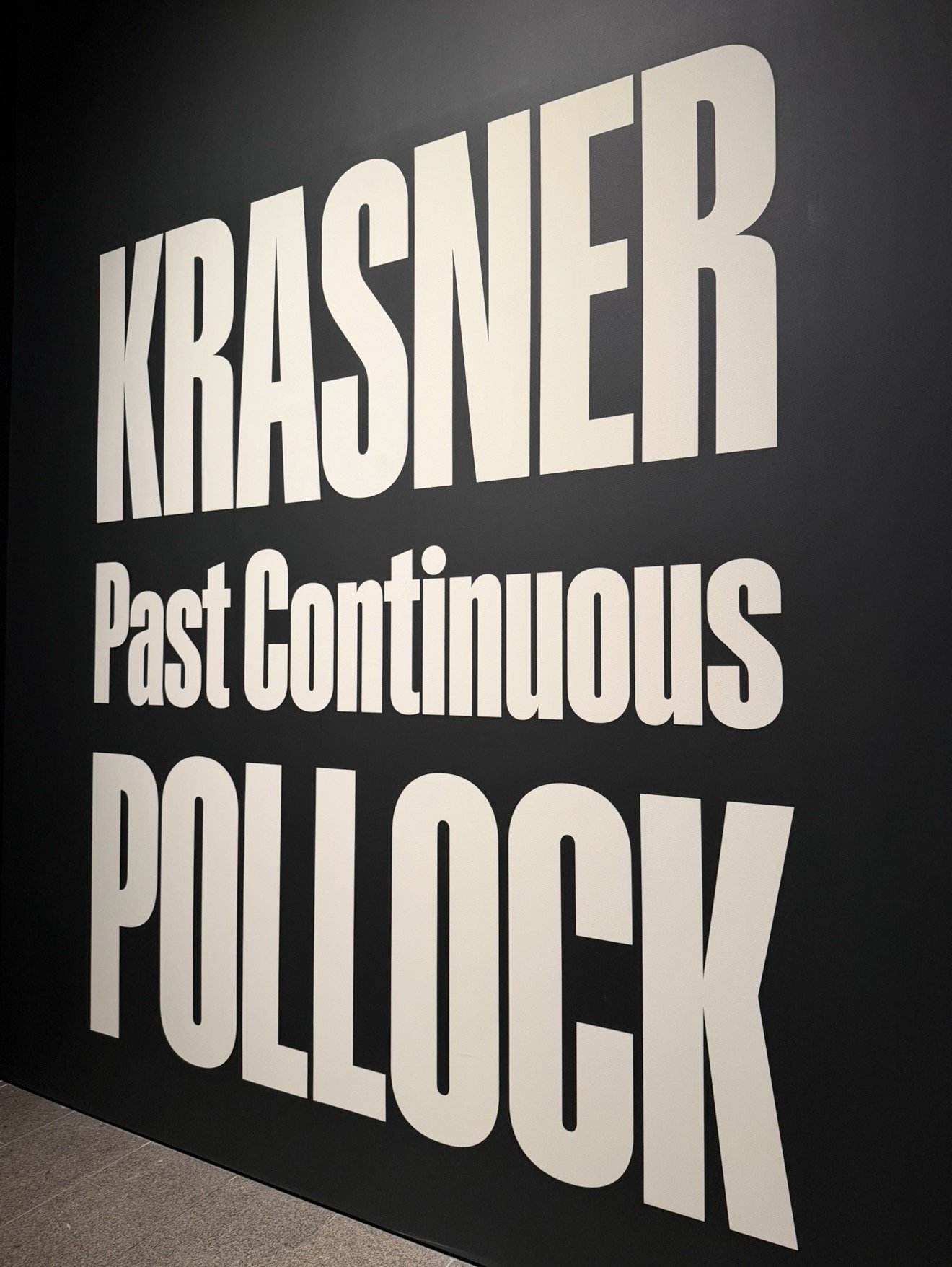
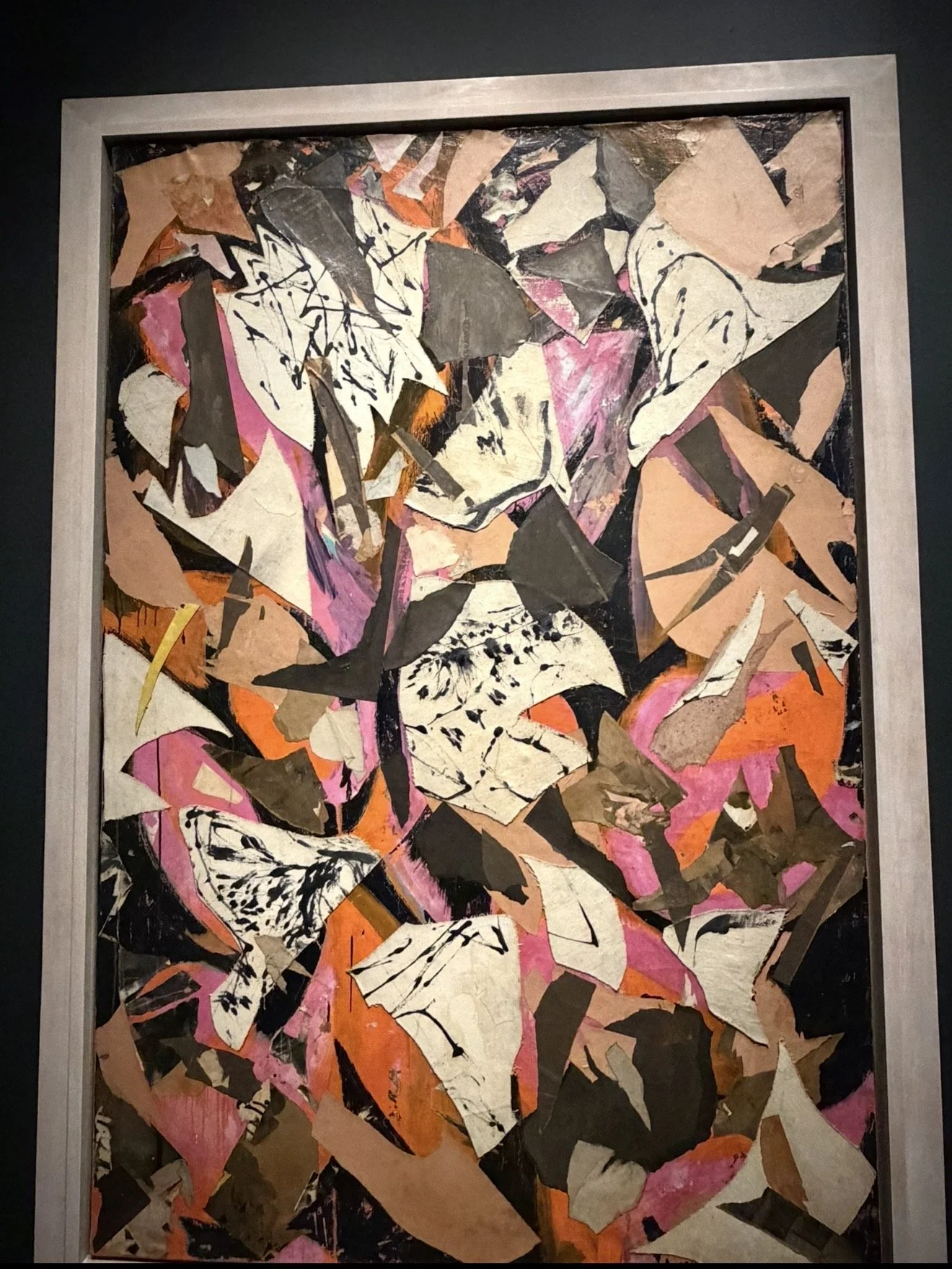
A few weeks ago, I visited the Metropolitan Museum of Art in NYC and spent some time exploring Past Continuous, a new exhibition featuring the work of artists Lee Krasner and Jackson Pollock. Initially, I was more interested in the backstory. They are two artists who met in New York, shared a life, and created art in their own distinct ways. I wanted to understand the people behind the paintings, perhaps even the relationship between them.
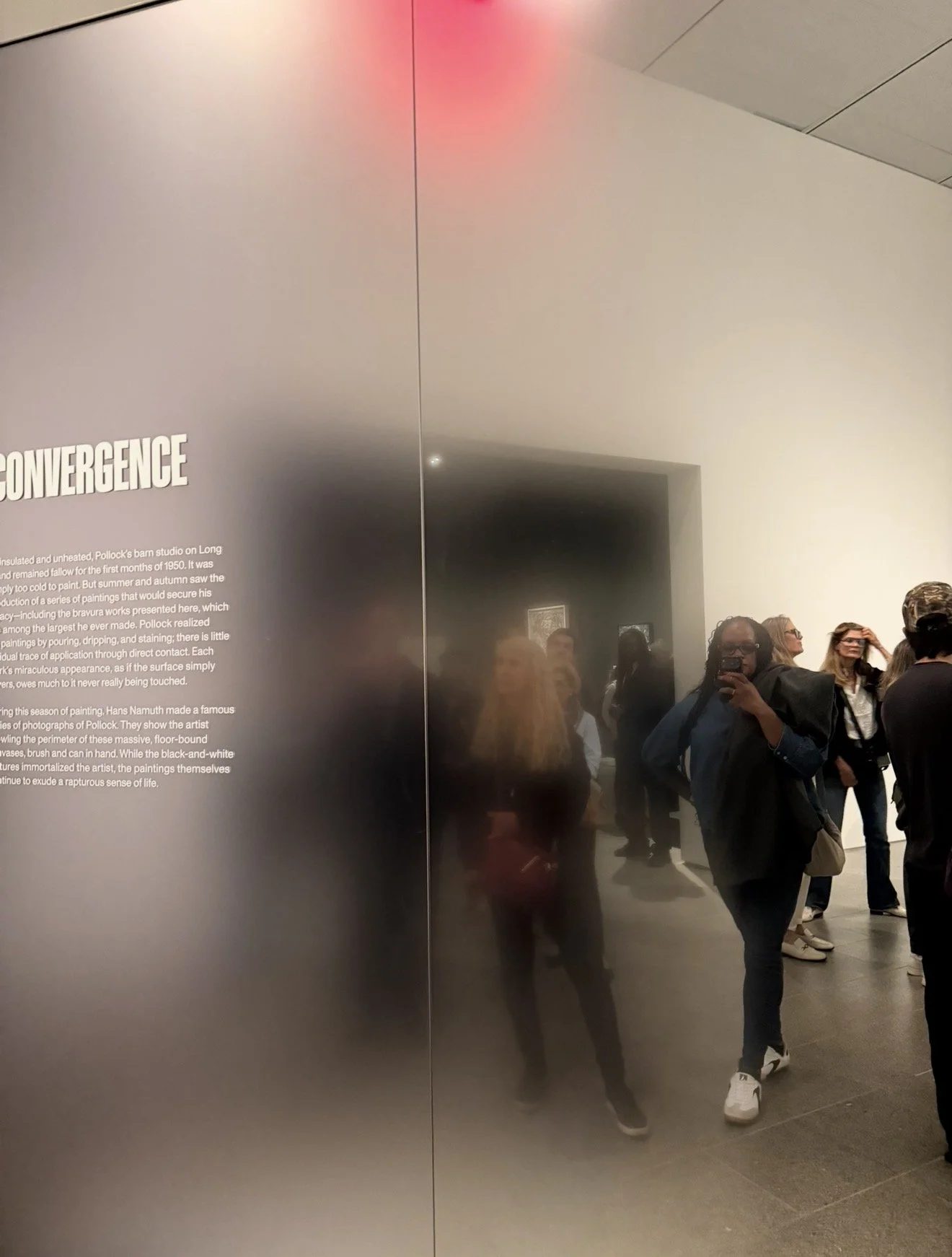
Then I walked into the exhibition and I'll be honest. I didn't quite get it at first. I'm not particularly drawn to highly abstract art, and I found myself looking at the pieces, trying to understand what I was supposed to see. I continued walking through the exhibition, taking it all in, even when I couldn't quite connect with what was in front of me. Then I came across a description of the movement: Abstract Expressionism.
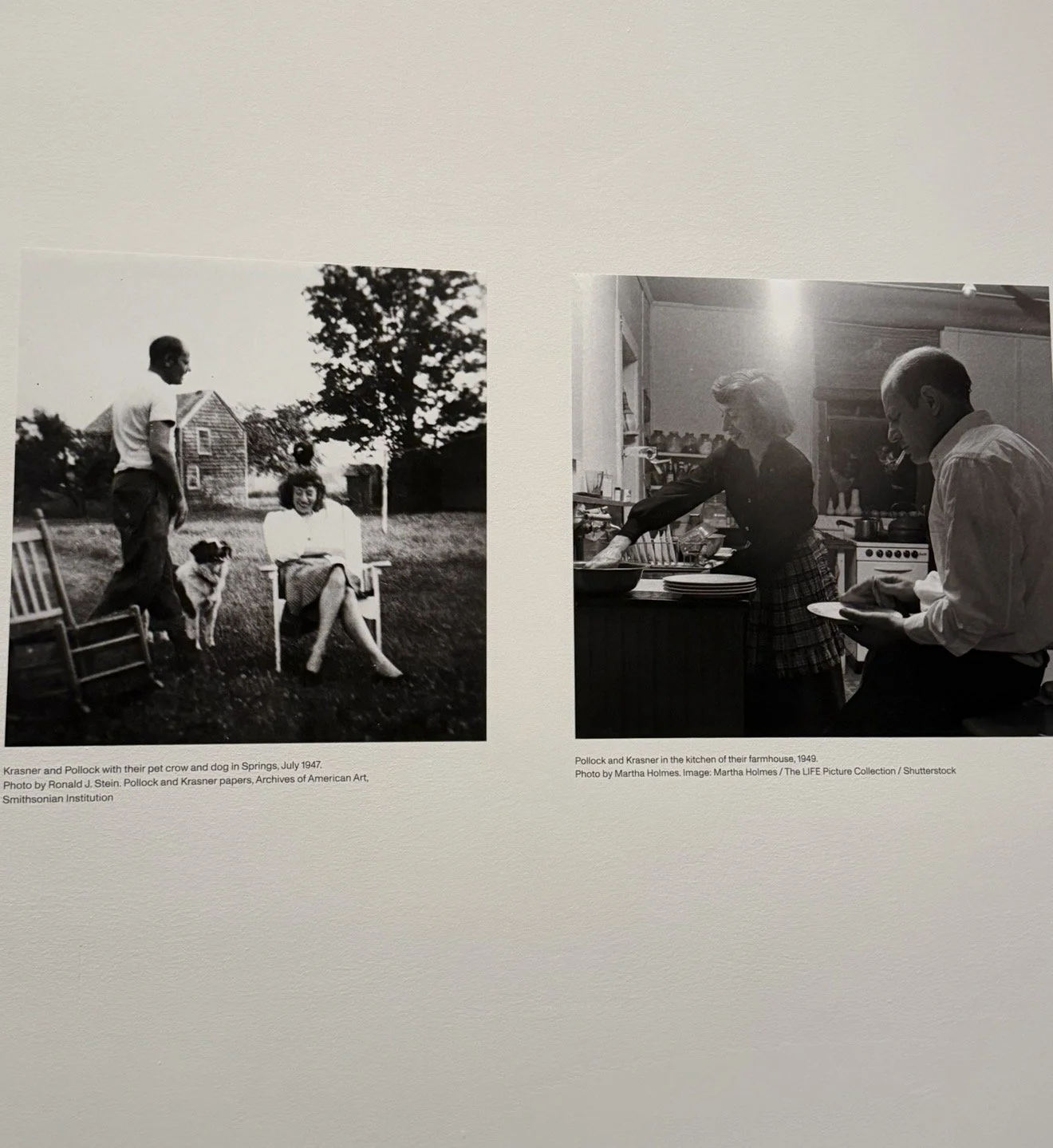
I thought to myself, okay, that makes sense. But it wasn't a painting that stayed with me the most. It was a photograph of the two artists together in their kitchen. It looked like they were talking and cooking.
Something about that image brought the experience closer to home. Here were two people, beyond the canvas and the art world, sharing an ordinary moment in a shared space. And suddenly, I was thinking less about what I understood about their art and more about what it means to build a life alongside another person.
I found myself thinking about relationships, the work I do as a relational therapist, and something I have been reflecting on for a while: aren't we all just trying to find someone to put our pieces together with?
The Pieces We Bring Into Love
Over the years, I've written about dating, learning to balance interest and investment in another person, pacing ourselves, navigating the challenges of vulnerability, and knowing when it is time to let go. We talk so much about finding love, but there is also the work of learning how to participate in it.
We have to learn how to fall in love, and we have to learn how to let go.
We learn to consider compatibility and alignment. We ask ourselves whether our values are similar, whether our visions for the future make sense together, and whether we can see ourselves building something lasting with another person. These are important questions. But relationships also ask us to consider what we bring into them.
We bring our histories. Our family dynamics. The ways we learned to communicate, or the ways we learned to stay quiet. We bring our strengths, our insecurities, our expectations, our disappointments, and the experiences that have shaped how we understand love.
Some of these pieces fit neatly into the lives we are building. Others require more patience and understanding. Some are still tender. Some we have spent years trying to make sense of. And some we may not even recognize as pieces of our own story until another person comes close enough to help us see them.
As a relational therapist, I often think about how our relationships become places where these parts of ourselves meet. We do not enter relationships as blank canvases. We arrive with a history, a way of understanding the world, and a set of experiences that influence how we give and receive love.
The work is not simply finding someone whose pieces look like ours. It is learning whether we can make room for one another's differences, understand the stories behind them, and build something that respects who we both are.
We Were Not Meant to Do Life Alone
One of my personal reflections from this summer has been the reminder that we are not meant to do life alone.
There is something deeply human about wanting to be known, held, understood, and cared for. We want people with whom we can share the ordinary details of our days and the experiences that change us. We want to know that when life becomes difficult, we do not always have to carry everything by ourselves.
Connection is not simply a romantic idea. It is part of how we experience safety and belonging. Connection is important to all relationships, not just romance. Our bodies respond to the presence of people we trust. A reassuring voice, a warm embrace, or the comfort of resting beside someone safe can help us settle in ways that are difficult to explain until we experience them.
I recently learned that a person can sleep while still experiencing a degree of hypervigilance. Sometimes, what we casually describe as being a light sleeper may be connected to a body that has difficulty fully settling. Of course, light sleep can have many causes, but the idea stayed with me. Even in rest, our bodies are not always able to let their guard down.
It made me think about how much of our lives is spent trying to feel safe enough to soften.
Safe enough to rest. Safe enough to speak honestly. Safe enough to ask for help. Safe enough to be vulnerable without constantly anticipating what might go wrong.
And yes, safe enough for a hug, a cuddle, or the quiet comfort of another person being near.
I have heard the familiar claim that we need eight hugs a day for survival. While that number is not an established scientific requirement, the sentiment points toward something worth remembering: human connection matters. We need meaningful ways to experience care, affection, and belonging.
We need people with whom we can exhale.
Building Something With Another Person
Perhaps this is part of what drew me to that photograph of Krasner and Pollock in their kitchen. I had entered the exhibition curious about their history and their work, but I left thinking about the everyday experience of sharing a life.
Art is created through a series of decisions, experiments, revisions, and moments of uncertainty. Relationships ask something similar of us. We are constantly learning what works, what needs to change, what we can accept, and what we must be willing to release.
There are beautiful parts of loving someone. There are also difficult moments, hard conversations, misunderstandings, disappointments, and moments when we have to confront the ways our own experiences influence how we show up. Building a relationship requires more than chemistry or a shared vision. It requires the willingness to keep learning one another.
Sometimes, another person helps us make sense of something we have carried for years. They may offer a different perspective on an old experience, challenge a belief we have held about ourselves, or remind us of a strength we have overlooked. In a healthy relationship, we can begin to see our own stories differently because someone has taken the time to understand them.
This does not mean our partners are responsible for healing every wound or making sense of every experience. That work remains ours, too. Nor does love require us to tolerate harm in the name of understanding someone else's history.
Rather, it means that we can choose relationships in which care, accountability, curiosity, and mutual effort make room for growth. We can find people who are willing to sit with us through the complicated parts without asking us to pretend those parts do not exist.
And we can offer that same care in return.
Putting our pieces together is not about finding someone to complete us. It is about finding someone with whom we can build something meaningful while remaining whole in ourselves.
Knowing When the Pieces No Longer Fit
Love can be lovely, but not every connection is meant to last.
Sometimes we discover that the life we want to build is different from the one another person wants. Sometimes our values do not align, our needs remain unmet, or the relationship asks us to abandon too much of ourselves to keep it going and the love is gone.
There are times when the work is on how to repair, and there are times when the work is knowing when and how to release.
Learning to let go does not mean that what we shared was meaningless. It can mean recognizing that love, history, and investment are not always enough to make a relationship right for us. We can honor what a connection taught us without remaining in it indefinitely.
This is part of the work of relationships, too: learning to distinguish between the discomfort that accompanies growth and the harm that requires us to protect ourselves.
We are not simply looking for someone to fit into our lives. We are looking for relationships in which we can continue to become ourselves.
The Work We Do Every Day
I went to the Met expecting to learn something about two artists and their relationship. I encountered artwork that challenged my preferences and asked me to sit with something I did not immediately understand. I kept looking. I stayed curious. And somewhere along the way, I found myself reflecting on the very thing that occupies so much of our lives.
Love
Connection
Compatibility
The courage to be known and seen
The willingness to keep building
Maybe that is part of the beauty of art. We do not always have to understand something immediately for it to move us. Sometimes, we simply have to remain open long enough to discover what it brings up in us.
And perhaps relationships ask the same of us.
We spend so much time searching for the right person, trying to determine whether someone aligns with our values, our hopes, and the life we imagine for ourselves. We learn to protect our hearts while remaining open to connection. We learn to invest without losing ourselves, to be vulnerable without abandoning discernment, and to recognize when it is time to keep building or when it is time to walk away.
All the while, we are trying to find people with whom we can share the weight of being human.
People who can hold our stories with care. People who help us see ourselves more clearly. People with whom we can create something that neither of us could have built in quite the same way alone. We are all trying to put our pieces together. Not perfectly, not without uncertainty, and certainly not without a few revisions along the way. But with enough care, honesty, and willingness, perhaps we can build relationships that allow us to feel a little more understood, a little more supported, and a little more at home in the lives we are creating. And maybe that is what we have been searching for all along.
A little more connection. A little more understanding. Someone with whom we can put our pieces together.
Thank you for reading.
Let’s connect. Email me: moniqueevanstherapy@gmail.com
Accepting individual, couples, and family clients (self-pay and select insurance via headway.co- Monique Evans, LCSW)
For social work clinicians, I also offer clinical consultation meetings (Not to be confused with clinical supervision for licensure hours) at any level of practice.
Book me as your mental health presenter for speaking engagements, podcasts, panels, and presentations.
Disclaimer:
The intention for using social media for social workers and other mental health professionals is for marketing, education, advocacy, thought leadership, and providing content in a technologically changing field. We want to do this while making potential therapy-seekers aware of the risks and benefits of engagement on social media and Internet where mental health professionals are present. A therapeutic relationship is a professional relationship and in today's technological climate, a social media presence or following your therapist on social media is not to be confused with a relationship outside of therapy. Ethical, professional, and therapeutic boundaries must be followed and honored.
A counseling social media page or blog is not psychotherapy, a replacement for a therapeutic relationship, or substitute for mental health and medical care. A social media presence as a counseling professional is not seeking an endorsement, request, or rating from past or current clients. No social media posts or blog should be considered professional advice. The information contained in posts is general information for educational purposes only.
Be mindful of sharing personal details or details or others if you choose to comment.
Please consult your physician or mental health provider regarding advice or support for your health and wellbeing.
If you or someone you know is experiencing a medical and/or psychiatric mental health crisis and requires assistance, please call 911 emergency services and/or go to your nearest emergency room (ED) department.
988- National Suicide Prevention Hotline (24 hours a day, 7 days a week)
Safe Horizon 24-hour Hotlines (se habla español):
Domestic violence victims: 800-621-HOPE (4673)