The Night We Gave You Flowers
A Social Work Month Reflection on Mentorship, Representation, and Legacy
As Social Work Appreciation Month comes to a close, I have been reflecting not just on the profession, but on the people who helped shape my journey into it. When we think about how we got where we are, most of us can name the people who made a difference along the way. The teachers who saw something in us. The professors who challenged us to think deeper. The supervisors who pushed us to grow. The mentors who helped us find our voice.
I have had many.
And this month, I found myself thinking about one moment in particular. A moment I now think of as the night we gave you flowers.
“Every Disappointment Is Good”
My journey into social work was not linear. In fact, it started with what felt like a major disappointment. When I started college, I was on a health sciences track and envisioned becoming a nurse. I loved science. I loved math. I was a strong student and it felt like a natural fit.
Until I hit a wall called Anatomy and Physiology I.
As interested and committed as I was, I could not get past that class. To avoid severely damaging my GPA, I made the difficult decision to take the final exam and then request a withdrawal/no credit slip.
At the time I remember thinking:
Okay. My GPA stays intact. It’s like this never happened.
But then came the harder question: Now what?
What I did not know then was something I now believe deeply: Every disappointment carries direction if we are willing to pivot.
The Pivot That Led Me to Purpose
Pivoting away from the health sciences meant I had to complete additional liberal arts coursework to finish my degree. At the time it felt like I was just trying to regroup academically. But that pivot quietly introduced me to the foundation of the work I do today.
I decided to learn a new language and chose French. I took an acting class, Sociology 101 and then Sociology of the Family.
Those classes did more than fill requirements. They expanded how I saw people and society.
French later allowed me to navigate my study abroad experience with confidence and curiosity. Sociology introduced me to systems thinking, family dynamics, and the broader context of human behavior. What felt like a detour was actually preparation.
Finding Social Work
After returning from studying abroad, I began my second-year internship in couples and family therapy through the Diversity in Social Work program at the Ackerman Institute for the Family, co-supervised by Laurie Kaplan, LCSW-R and my late supervisor, Sippio Small, LCSW-R.
That experience would change the trajectory of my career.
It was there I learned that social work is not just about helping people. It is about understanding them. It is about seeing context. It is about learning that sometimes the most powerful intervention is presence. “The conversation is the intervention.” -Sippio
It was also where I experienced something that remains incredibly important: representation.
The Power of Representation
After my years in higher education, I can say clearly how important it is for Black students and students of color to see BIPOC instructors, supervisors, and clinicians in positions of leadership and expertise.
In social work and mental health, representation still matters deeply. There was a time when African Americans represented only about 4% of therapists. While that number continues to grow, we still have work to do.
Seeing supervisors and clinicians who looked like me was not just inspiring. It was grounding. It communicated something without words: You belong here, too.
Programs intentionally designed to bring diverse clinicians into the field do more than create opportunity. They create sustainability. They create pathways. They create legacy.
Learn to Trust the Process
My final year of graduate school and the months that followed were some of the most demanding of my life. It was one of those years where growth feels exponential because you are being stretched in every direction at once.
I was attending classes.
Completing my internship.
Recovering from heartbreak.
Working full time.
Preparing for licensing exams.
Applying for career-track positions.
It was one of those periods where growth feels exponential because life is asking so much of you at the same time. I was learning not just clinical skills, but endurance. Not just theory, but resilience.
That summer, I passed my LMSW masters exam. That alone felt like a major milestone. I had been submitting applications and preparing for what I hoped would be my first career social work position. But at the same time, I kept showing up to work every day, just putting one foot in front of the other.
I remember telling myself quietly:
I’ll hear something soon.
I wasn’t overly anxious about it. I was still working. I knew I was building experience. I trusted something would land when it was supposed to.
And then one evening while I was at work, my phone rang from an unfamiliar number. It was the call from what would become my first social work job.
They told me they were impressed with my resume as a recent graduate and especially interested in my training experience at Ackerman. My background in family therapy stood out, particularly because the role involved working with children and families.
I thought to myself. I landed my first career job. They actually called me?!
I remember hearing stories of people with degrees waiting almost two years post-graduation to get a job in their field. I graduated in May. I started in October. Wow, I was an exception! I went for the interview. I received the offer. I handed in my resignation. And the rest is history.
Looking back now, I realize that season taught me something important: sometimes growth looks like continuing to show up even when you do not yet see the results. Sometimes it looks like trusting that the work you are putting in is preparing you for something that is already making its way toward you.
After everything I had pushed through, it felt like affirmation that the work had meant something.
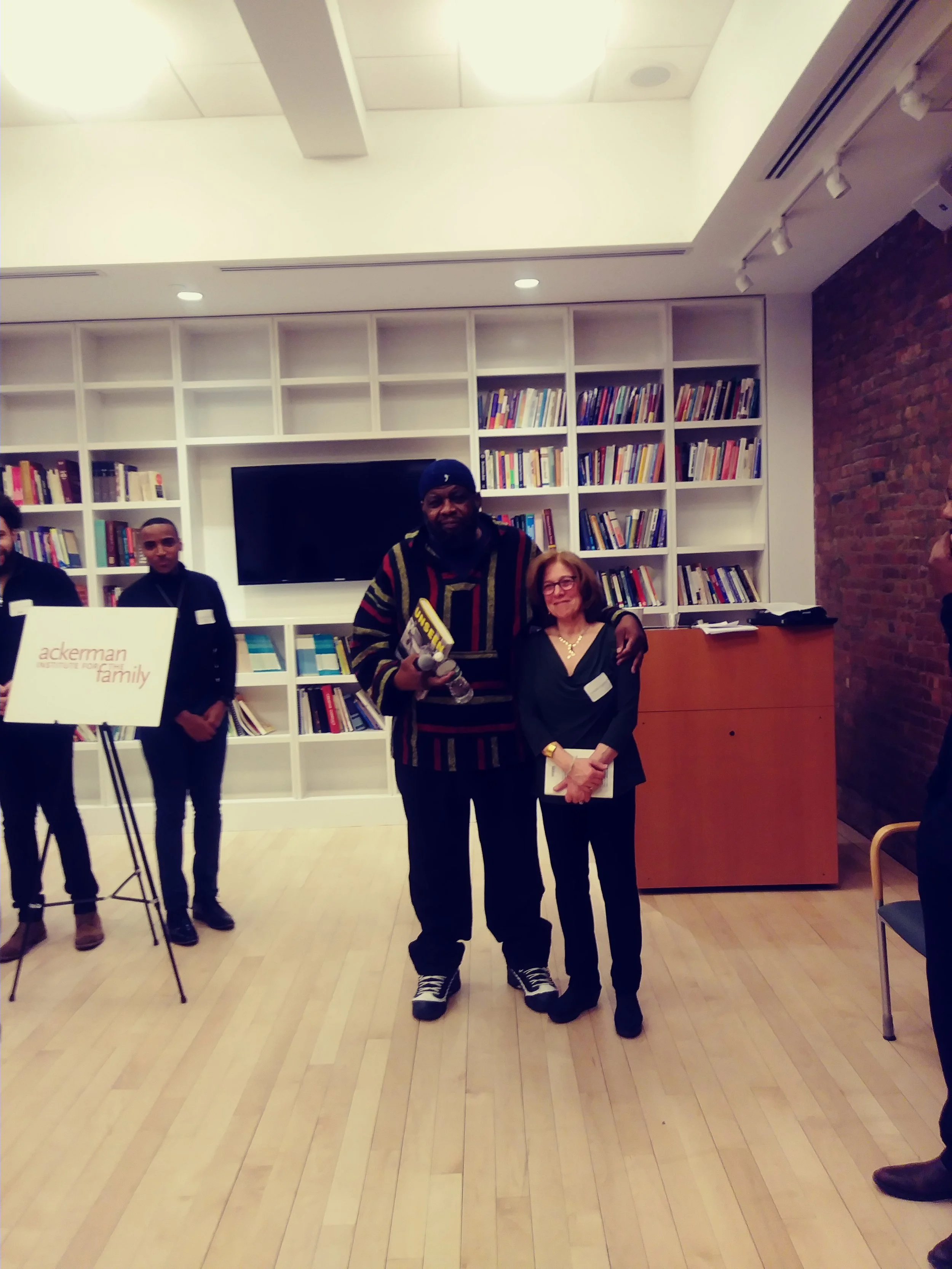
The Night We Gave You Flowers
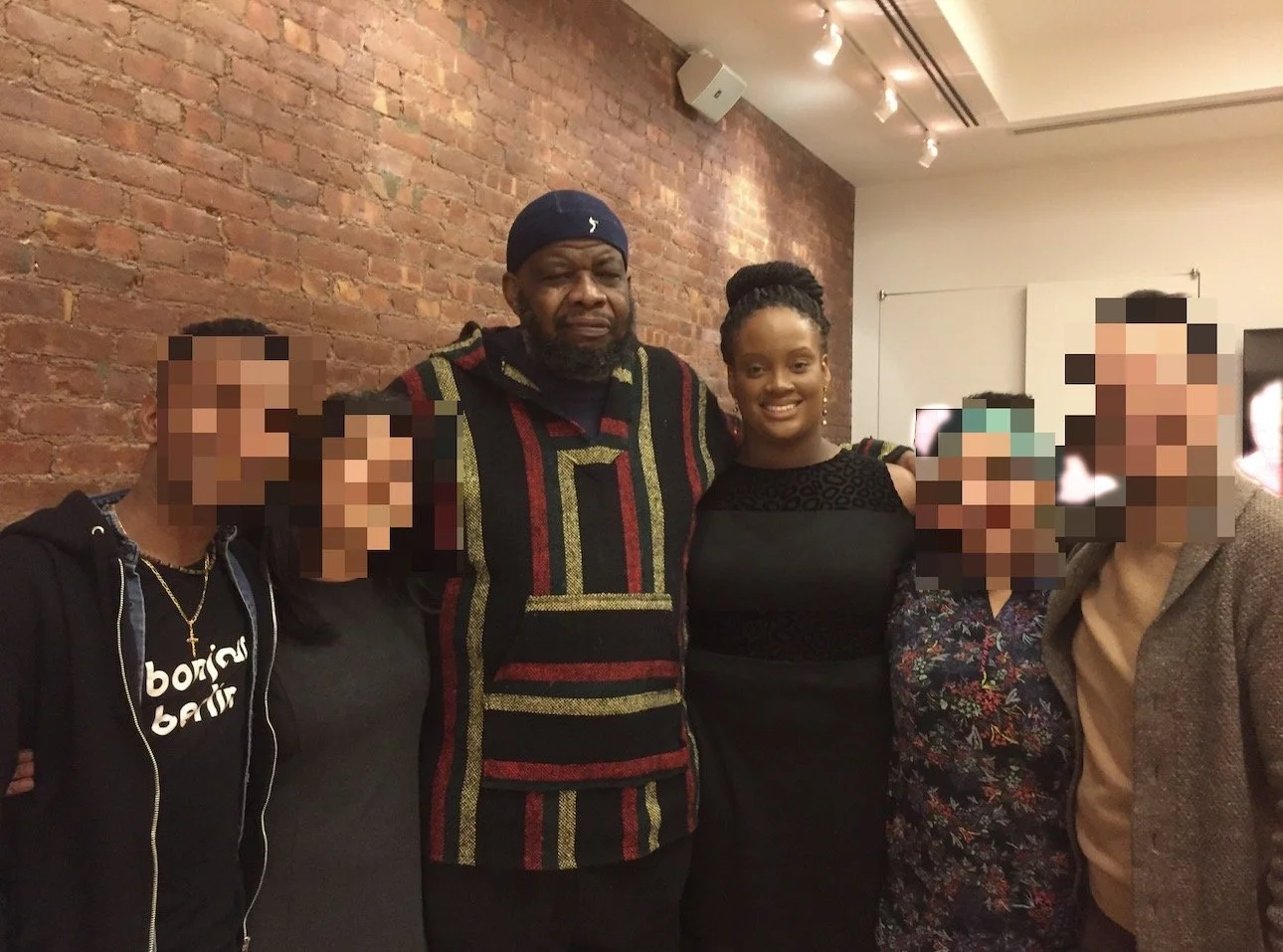
Less than a year later, I had the opportunity to return to Ackerman to celebrate the program I trained in and the people who helped shape my clinical foundation. I remember working in Brooklyn at the time and bringing a change of clothes so I could go straight from work. That small detail has always stayed with me because it perfectly represents that season of my life: always moving, always growing, always showing up fully.
That night was more than an event; it was a moment of gratitude. A moment to say: Since internship, here is what I have done. Here is how I have grown. And I could not have done it without you. Thank you. It was one of those rare moments you know you could not miss for the world, the kind where even just being present feels essential.
Beyond catching up with everyone, it was about witnessing a community come together. Former students traveled from all over the world, and even those who couldn’t attend in person sent their greetings. Being there in that shared space, giving thanks as a group, it was a “you had to be there” kind of evening; one that honored the mentorship, the guidance, and the legacy that continues to shape new generations of clinicians.
This night spoke not just to individual accomplishments, but to the profound impact and investment that Laurie and Sippio gave to everyone who crossed their paths. Every student who had the opportunity to learn from them carried a piece of their wisdom forward, shaping how we show up as clinicians, mentors, and community members. It was a celebration of their legacy: a legacy that continues to live on in all of us who were fortunate enough to be guided by their care, insight, and generosity.
The Wisdom That Stays With You
When I think about what stayed with me most from that time, it is not just clinical techniques or theories. It is the simple, practical wisdom that shaped how I learned to practice and how I learned to carry myself as a social worker. Much of that wisdom came from Sippio and the way he approached both the work and the people learning how to do it.
I still hear his voice in the small but important reminders:
Be at least an hour early before your clients.
Stay ahead of New York City public transportation.
Watch your tapes and learn from your work.
Use your voice.
Trust your clinical instincts.
Prepare, but also be present.
These were not just professional tips. They were lessons in discipline, confidence, preparation, and taking ownership of the responsibility we hold as clinicians. He was teaching us how to think, how to observe, and how to believe in what we were seeing in the room.
What I appreciate even more now is realizing I was not the only one who received this investment. Sippio poured this same level of care, structure, and belief into generations of students. Many of us went on to different spaces in social work and mental health, but we carry pieces of that training with us. His impact did not stop with the students he directly supervised. It lives on in the work we do every day with clients, families, and communities.
I learned so much during that year. It was truly an exponential period of growth for me professionally and personally. Looking back, I also realize how meaningful it was that we had the opportunity to celebrate him and acknowledge his impact while we could.
I am deeply grateful we got that chance.
And in many ways, the best way I know how to honor what he gave us is to continue practicing with the same intentionality, to continue mentoring others, and to continue passing forward the kind of wisdom that shapes not just good clinicians, but grounded and thoughtful ones.
Exploring the Many Paths of Social Work
One of the beautiful things about social work is that there is no single path. Some of us go into direct practice. Some into hospitals. Some into schools. Some into community work. Some into policy. Some into leadership. Some into private practice.
Many of us explore multiple paths before finding where we feel most aligned.
And that exploration matters.
Because social work is not just about where you start. It is about how you grow into the work and how the work grows you.
Continuing the Legacy
Now, ten years into this profession, I realize something even more meaningful: the wisdom that was poured into me did not stop with me. The lessons, the guidance, the patience, and the belief that my supervisors and mentors extended to me continue to live in how I show up every day as a clinician. I carry those early teachings into my own work with clients, into the way I think through complex cases, into the consultations where I collaborate with colleagues, and into the ways I now support newer clinicians who are just beginning to find their footing.
I often find myself sharing the same practical and grounding advice that was once given to me: trust your instincts, prepare well, stay curious, use your voice, and remember that relationship is often the most powerful intervention we have. In many ways, I now understand that part of becoming seasoned in this field is realizing that we are not just practicing social work, we are continuing a lineage of teaching, support, and care.
This is how legacy works. Someone takes the time to invest in you, to challenge you, to encourage you, and to help you grow into your professional identity. Then one day you look up and realize you are doing the same for someone else. The impact continues, often quietly and without fanfare.
Not because of titles.
Not because of recognition.
But because someone cared enough to teach you well, and you chose to carry that forward.
And maybe that is one of the most beautiful parts of social work: that the investment we make in each other does not end with us. It continues in every client we serve, every colleague we support, and every future social worker we help believe they belong here too.
A Closing Reflection
As this month comes to a close, I find myself thinking about all the people who helped shape me into the social worker I am today. The ones who challenged me. The ones who believed in me. The ones who taught me to trust my voice.
And I think about something else too:
We should not wait until the end of someone’s career, or life, to give them their flowers.
Sometimes we get the gift of saying thank you in real time.
I am grateful we got that night.
And in my own way, I hope I continue that tradition: through how I teach, how I supervise, how I show up, and how I pour into others the way others once poured into me.
Because this is how we undo toxic systems.
This is how we build healthier ones.
This is how we continue the work.
And this is how we continue the legacy.
Happy Social Work Month! May we honor those who shaped us by continuing to build a profession rooted in mentorship, humanity, and hope. And as we continue this work, may we never forget to give people their flowers while they are here, and may we live in such a way that one day someone will say we helped shape their path, too.
Let’s connect. Email me: moniqueevanstherapy@gmail.com
Accepting individual, couples, and family clients (self-pay and select insurance via headway.co- Monique Evans, LCSW)
For social work clinicians, I also offer clinical consultation meetings (Not to be confused with clinical supervision for licensure hours) at any level of practice.
Book me as your mental health presenter for speaking engagements, podcasts, panels, and presentations.
Disclaimer:
The intention for using social media for social workers and other mental health professionals is for marketing, education, advocacy, thought leadership, and providing content in a technologically changing field. We want to do this while making potential therapy-seekers aware of the risks and benefits of engagement on social media and Internet where mental health professionals are present. A therapeutic relationship is a professional relationship and in today's technological climate, a social media presence or following your therapist on social media is not to be confused with a relationship outside of therapy. Ethical, professional, and therapeutic boundaries must be followed and honored.
A counseling social media page or blog is not psychotherapy, a replacement for a therapeutic relationship, or substitute for mental health and medical care. A social media presence as a counseling professional is not seeking an endorsement, request, or rating from past or current clients. No social media posts or blog should be considered professional advice. The information contained in posts is general information for educational purposes only.
Be mindful of sharing personal details or details or others if you choose to comment.
Please consult your physician or mental health provider regarding advice or support for your health and wellbeing.
If you or someone you know is experiencing a medical and/or psychiatric mental health crisis and requires assistance, please call 911 emergency services and/or go to your nearest emergency room (ED) department.
988- National Suicide Prevention Hotline (24 hours a day, 7 days a week)
Safe Horizon 24-hour Hotlines (se habla español):
Domestic violence victims: 800-621-HOPE (4673)